Suppressing the PBT Pre-Trial
When a driver is stopped for DWI, the moments that follow can shape not only the arrest but also how a jury later interprets the officer’s decisions. One of the most powerful—and often overlooked—moments is what happens on the video after a driver submits to a Portable Breath Test (PBT).
It is important to distinguish an Intoxilyzer breath test from a PBT. Unlike a PBT, an Intoxilyzer test is admissible under the proper evidentiary predicate. PBTs do not enjoy the same legislative support, and Texas does not recognize the reliability of their numerical results. In fact, Texas appellate courts have consistently held that the quantitative alcohol concentration from a Portable Breath Test is simply not admissible.
Officers often use a PBT as a preliminary roadside screening tool. It is not the evidentiary breath test used in court, and its numerical results cannot be admitted at trial. Yet the actions an officer takes immediately after the PBT can tell a story—often a misleading one.
One of the most significant actions after administering a PBT? Immediately handcuffing the driver.
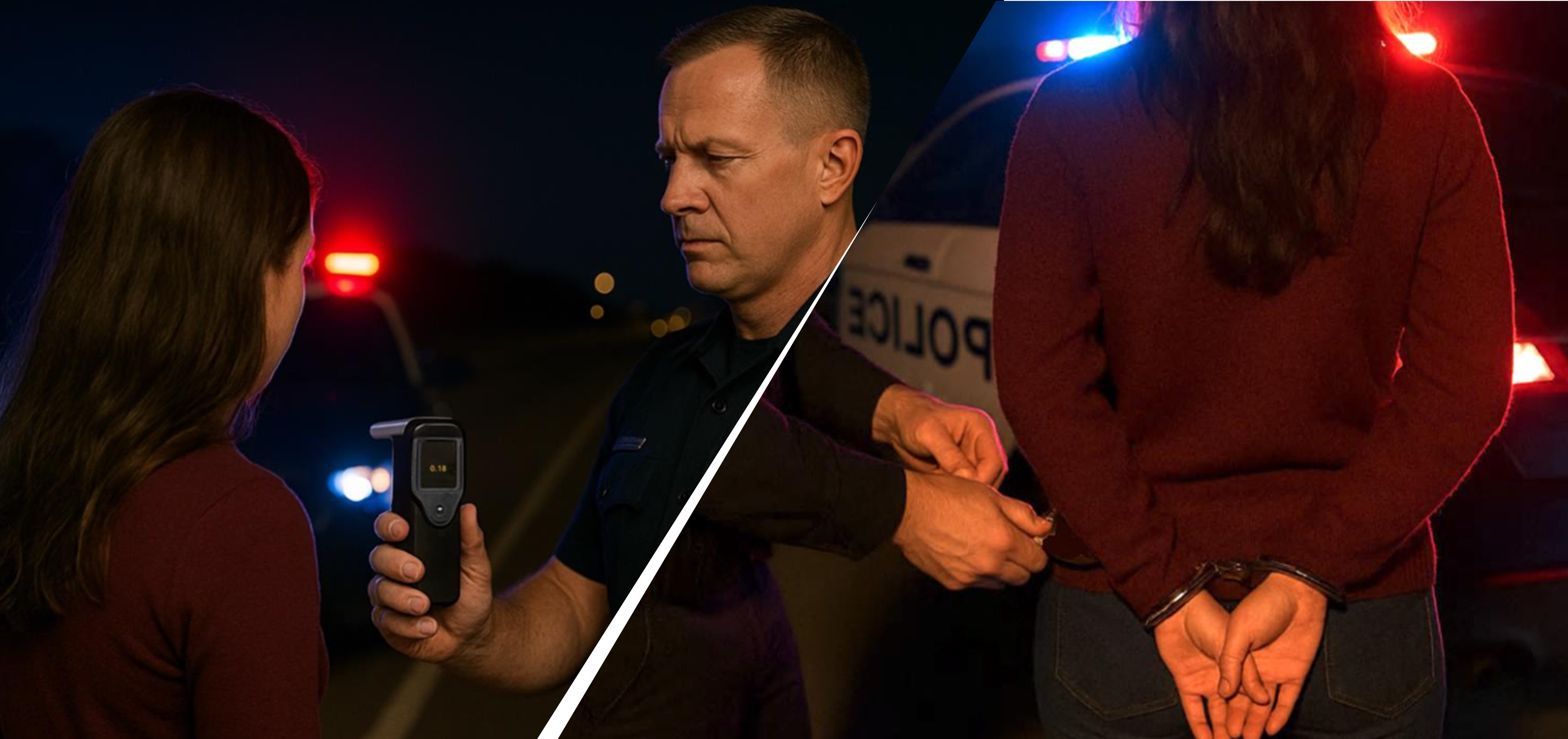
Why Immediate Handcuffing Matters
Jurors pay close attention to officer behavior. Even if PBT results themselves are not admissible, jurors observe context clues:
- The driver agrees to blow into the PBT.
- The officer looks at the test result.
- Without hesitation, the officer places the driver in handcuffs
Human nature fills in the blanks
Jurors understand that officers arrest drivers for DWI when they believe the driver is over the legal limit. If the handcuffing occurs the instant the officer reads the PBT, jurors may draw the natural inference: “If the officer immediately arrested the driver right after the test, it must have shown they were intoxicated.”
This is particularly problematic because:
- PBT readings are imprecise
- Jurors will not hear evidence of the actual test result.
- Officers sometimes use the PBT merely to confirm suspicion already formed, not because the PBT result itself was reliable.
Yet the dramatic moment of handcuffing—especially right after a breath test—carries more emotional weight than many technical explanations delivered in court.
The Inference the Jury Is Likely to Draw
Most jurors have little experience with DWI investigations. They rely on common sense. And common sense tells them:
- Officers do not arrest sober people.
- Officers would not arrest someone unless a breath test confirmed intoxication.
- The timing of the arrest after just having taken the PBT must mean something.
Even if the defense explains that the PBT is not admissible and is not scientifically reliable, jurors may still think: “Why would the officer arrest the driver right after the test unless the number was high?”
This is the real danger: the officer’s actions can suggest to jurors that the driver “failed” the roadside test—even though no admissible evidence shows that. A driver may have performed well on the field sobriety tests, but the image of an arrest immediately after a PBT can unfairly influence a juror’s decision.
How Defense Attorneys Can Address the Issue
If you suspect an arrest warrant has been issued in your name, follow these steps to confirm its validity:
A skilled defense attorney will often need to:
1. File a Pretrial Motion to Suppress the PBT
Counsel should file pretrial motions detailing the sequence of events involving the PBT and the subsequent arrest. Include with the motion a video clip with clear time stamps directing the court to the exact moments showing the PBT and the arrest. In the motion, explain that the scientific basis for PBTs is unreliable, and cite appellate decisions holding that numerical PBT results are inadmissible to prove intoxication.
At the pretrial hearing, argue that when a PBT is immediately followed by an arrest, the only inference a juror will draw is that the driver’s alcohol concentration exceeded the legal limit—an inference not supported by admissible evidence. Emphasize that the video creates a misleading impression that the driver provided a breath sample over the legal limit, giving jurors a false impression of the evidence.
Finally, argue that any minimal probative value the PBT sequence may have is substantially outweighed by the danger of unfair prejudice. For this reason, the PBT and the related portion of the video should be excluded.In the event the trial court denies the motion, preserve error for appeal by asking for a running objection at trial.
Counsel should also object at the time the video is offered. Prepare the jurors about the limits of the PBT.
2. Clarify the limits of the PBT
Jurors must understand that the PBT is a rough screening tool used on the side of the road—not an evidentiary measurement.
3. Explore the officer’s reasoning
Cross-examination can reveal whether the officer had already made up their mind before the PBT or whether the PBT was used improperly.
2. Clarify the limits of the PBT
Jurors must understand that the PBT is a rough screening tool used on the side of the road—not an evidentiary measurement.
4. Highlight alternative reasons for handcuffing
Officers sometimes detain for safety or investigative protocol, not because of PBT results.
Why This Matters
The criminal justice system depends on actual evidence, not implications created by an officer’s stage-managing of events. When a DWI arrest occurs immediately after a PBT, the sequence can lead jurors to believe they “know” the result—even though that supposed result is never tested in court.Ensuring that jurors understand the difference between inferences based on officer conduct and evidence actually admitted at trial is essential for a fair verdict.




Leave a Reply